

The "Breakup" No Founder Wants to Make: How to Switch Labs Without Ruining Your Hero Product
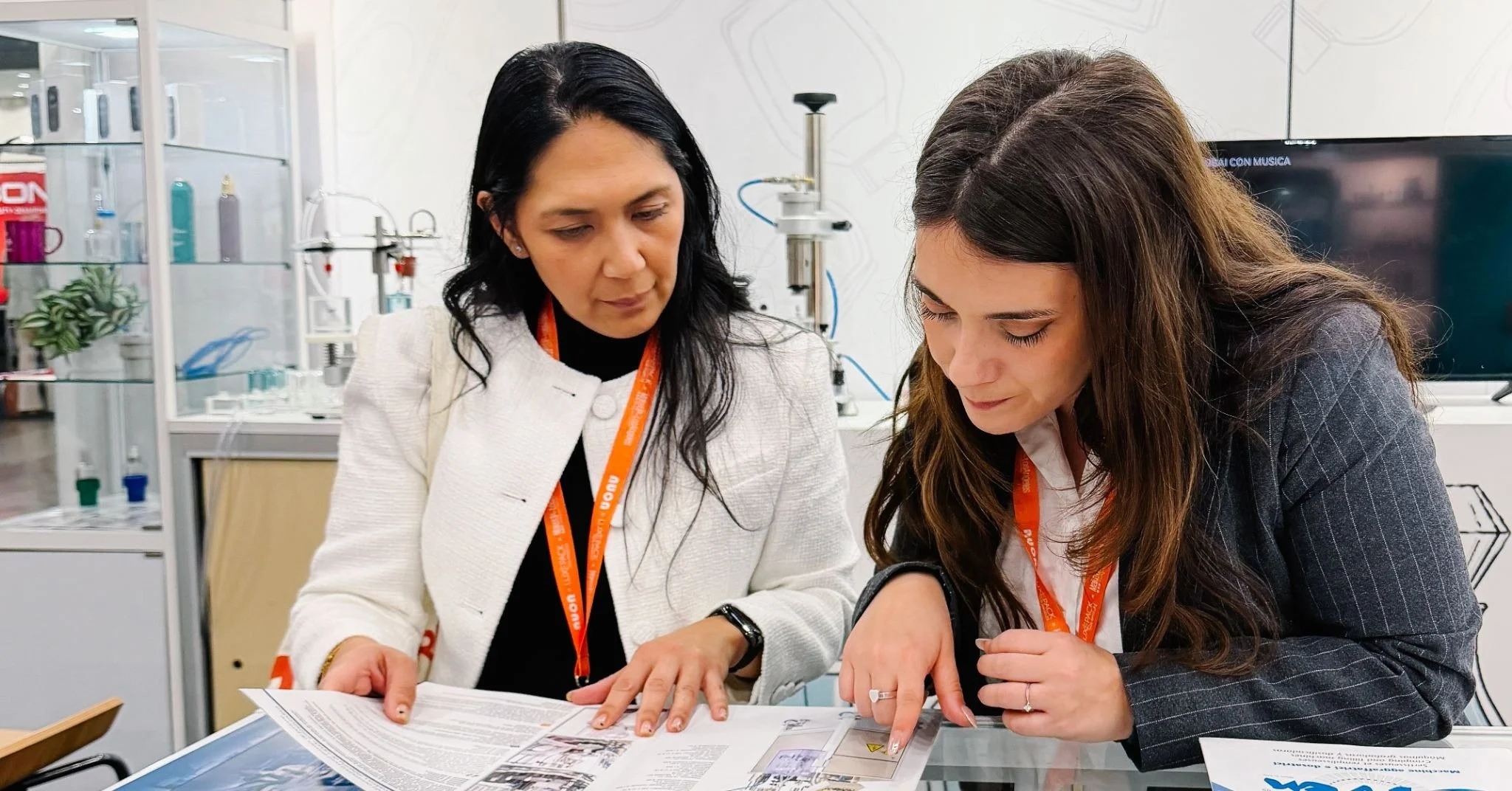
You cannot copy-paste chemistry. President of Above Rinaldi Kat Khoury reviewing the exact mechanical parameters needed to reverse-engineer and scale.
Author: Kat Khoury, President at Above Rinaldi Labs
I talk to a lot of beauty founders. And there is one topic that almost universally makes them visibly anxious: moving their manufacturing.
You have a hero product. It’s paying the bills. It has thousands of five-star reviews. But behind the scenes, your current lab is dropping the ball. Shipments are chronically late. The communication is terrible. The last batch felt just a little bit thinner than the one before it, and your account manager can't explain why.
You know you need to leave. But you stay.
You stay because you are paralyzed by the fear that a new lab won’t be able to replicate your "baby." You think: What if the texture changes? What if the actives die? What if I break the one product keeping my brand afloat?
I get it. It is a terrifying leap. But staying with a manufacturing partner who limits your growth out of fear is a recipe for stagnation. At Above Rinaldi Labs, we handle these transitions constantly.
Here is what I tell founders when they sit down in my office to plan their escape route: Switching labs shouldn’t be a crisis. It is just a matter of controlling the math.
If you are ready to make the move, here is how you do it safely.
1. Realize you need the "Process," not just the Recipe.
The biggest misconception in this industry is that if you own your formula (your INCI list and percentages), you can make your product anywhere.
That is only half the truth. A formula is just an ingredient list. The process, the exact temperature the tank needs to hit, the speed of the homogenizer, how fast the batch is cooled down, is what actually dictates the texture and stability of your product.
When you leave your lab, you need your batch records and processing instructions. If your current lab refuses to hand them over, don't panic. You just need to ensure your new partner has the engineering capability to reverse-engineer the processing. (We do this a lot).
2. Ask your new lab about the physics of scaling up.
Heating and cooling a 1-kilo beaker in a lab is easy. Heating, mixing, and cooling a 3,000-kilo tank on a manufacturing floor requires an entirely different understanding of thermodynamics.
Many labs fail at "Tech Transfer" because they just multiply the ingredients by 3,000 and hope for the best. The emulsion breaks, or the sheer stress of massive equipment destroys your delicate actives. When interviewing your next lab, ask them specifically how their compounding equipment handles scale-up. If they only talk about minimum order quantities and not mechanics, walk away.
3. Demand a "White Glove" baseline before you sign the PO.
Do not let a new lab just run 50,000 units of your product and ship it to you.
When you transition a product to us, before a single bottle is filled, we establish a rigorous, mathematical baseline. We run pilot batches. We match the specific gravity. We test the pH stability and the viscosity to ensure it flows exactly how your customers expect it to. We don't guess if the product is right; we run it through an analytical gauntlet to prove it.
The Bottom Line
Outgrowing your first contract manufacturer is actually a massive milestone. It means you are scaling. It means your brand is working.
Don't let the fear of a botched transition keep you anchored to a partner who can't match your ambition. You need a team that treats your intellectual property with absolute architectural respect.
If you have a complex formula and you are ready to transition to a facility built for operational excellence, let’s have a conversation.
We don't scale mediocrity. We scale molecular precision.
Ready to upgrade your manufacturing? Submit your technical brief to our team directly through our intake portal, and let's map out your transition: 👉
