

Author: Erick Jonathan Guzman, Digital & Social Marketing Manager at Above Rinaldi Labs
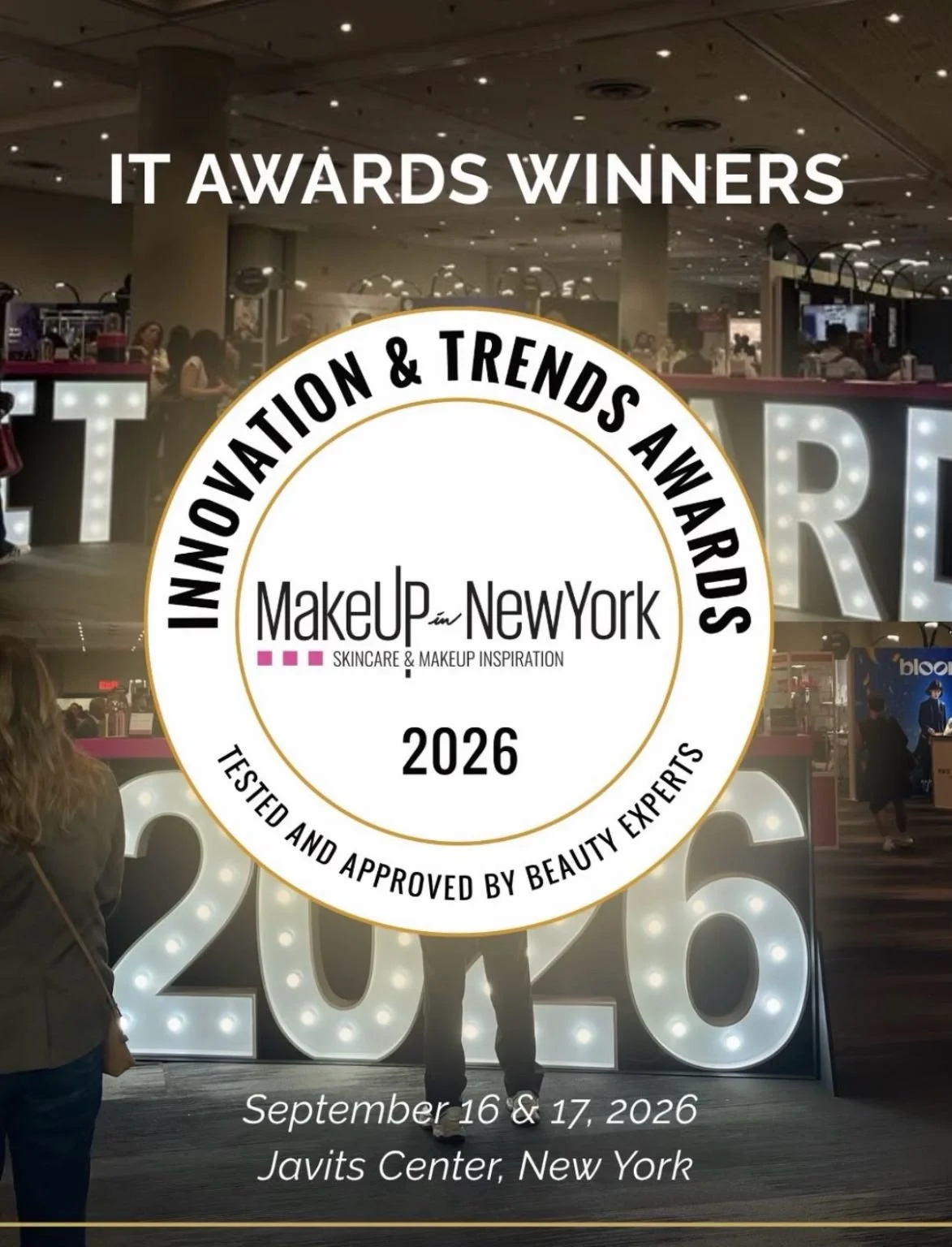
Above Rinaldi Wins Innovation & Trend Award At MakeUp in NYC 2026
Walking a trade show floor can be exhausting. You see thousands of products built just for a social media grid. The problem is they tend to have a fractional/negligible percent of their hero active ingredient inside the formula. You buy into the marketing and claims on the beautiful images and graphics on display but the formula itself can be subpar. We wouldn't accept that disconnect. We needed a product that could shake up a category visually while hitting real clinical thresholds.
I came at this white space purely from a visual marketing angle. Edible ingredients resonate with buyers right away. Mary Haddad, our Innovation Brand Development Manager, and I locked in on a refreshing watermelon profile for a nostalgic sensory hit. But a clever mood board needs clever chemistry behind it. Most clay masks leave skin tight and stripped. We pictured an airy suspension with no weight at all. Think shaving cream, but engineered to clean pores and leave a dewy finish.
We took this massive technical ask to our founder and CSO, Fred Khoury, and our R&D chemist, Irving Mont.
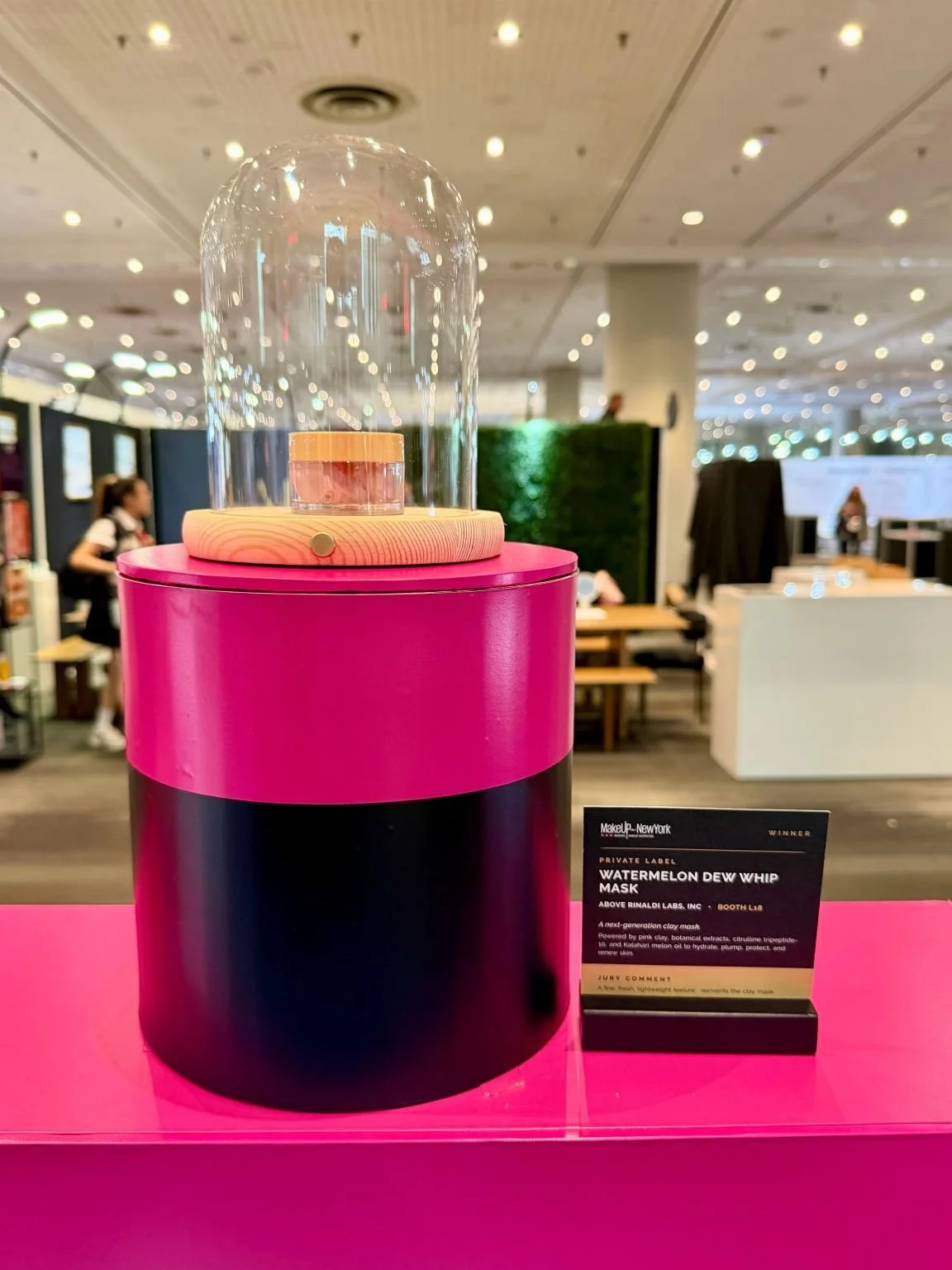
Fred wouldn't compromise the claims for the sake of texture. He skipped standard clays and sourced Beraclay Red from France for an instant lifting effect and a natural pink hue. Then he added Tripeptide-10 Citrulline to fight photoaging and boost elasticity by 173 percent. Irving took on the brutal job of forcing these heavy actives into an impossible whipped texture. My job was simple enough. I shot extreme macro photography to show off the formula's physical structure, designed the pitch assets, and submitted the mask to the MakeUp in NewYork IT Awards.
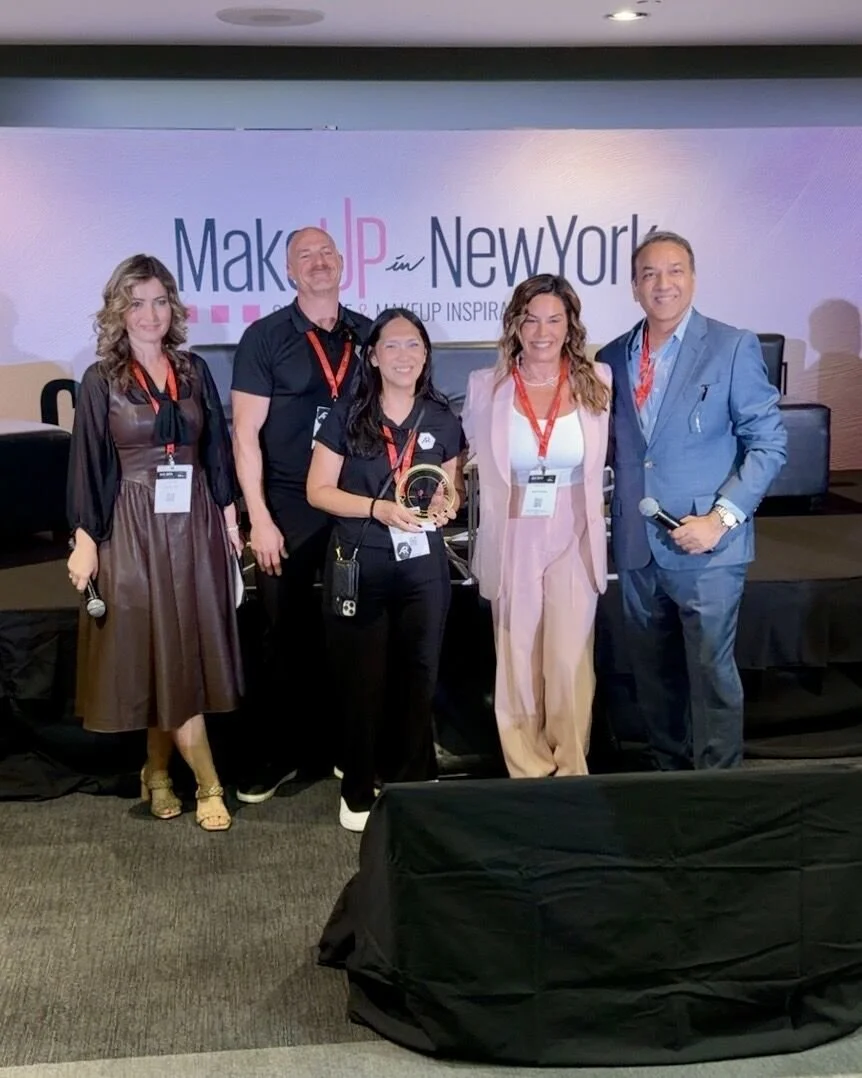
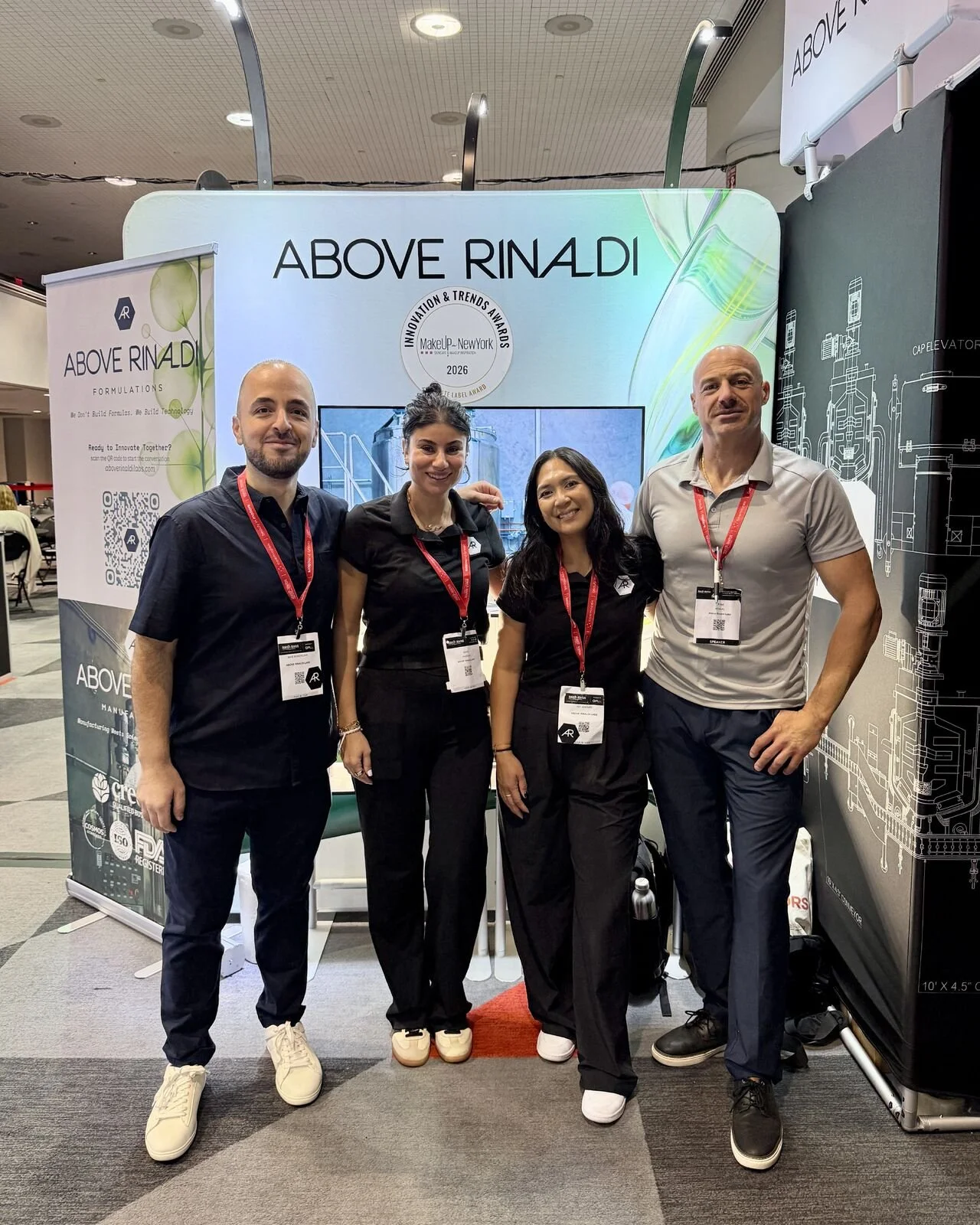
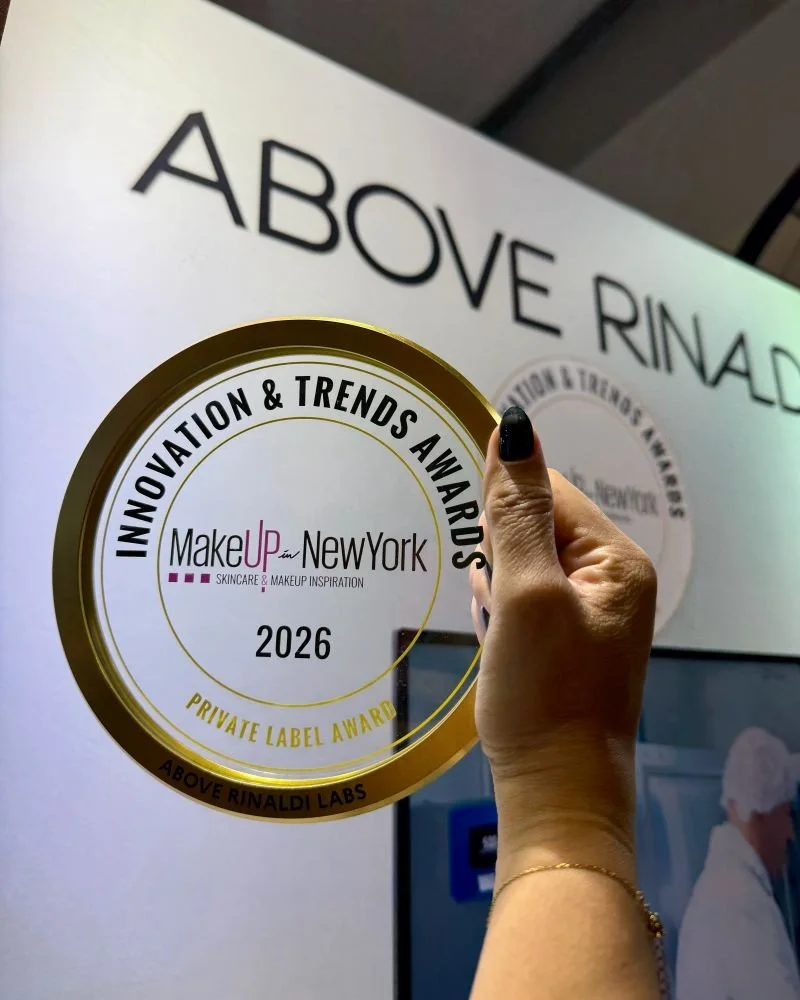
MakeUp in NewYork 2026 was our first time ever exhibiting on the show floor. We weren't about to show up quietly. We arrived in Manhattan with two distinct formulas nominated for the Top Ten IT Awards. The Watermelon Dew Whip Mask sat right beside our Bee Sting Spicule Lip Honey in the innovation showcase. This momentum at our booth was wild. We launched a big collaboration giveaway with packaging powerhouse Meiyume featuring our Liquid Aura Bi-Phasic Mist, and Fred took the main stage on an industry panel about the future of brand building.
Then came the winner announcement. We took home the 2026 IT Award for the Watermelon Dew Whip Mask.
Industry validation is nice. Hard market data is better. Mintel GNPD Deep Research recently audited our formula and showed we hit a lucrative, first-to-market nerve. Their data shows whipped textures in clay masks jumped from 3.5 percent to 13.3 percent of tracked launches. Consumers want comfortable application. Firming claims in masks also jumped from 21 percent to 29 percent. Yet Mintel found almost zero US clay masks using peptides, and none at all with Tripeptide-10 Citrulline.
We proved traditional pore care and high-performance anti-aging can live in the same jar at clinical percentages. Awards are nice. Disrupting a stagnant category is better. I sat down with Mary, Fred, and Irving to break down exactly how we took this formula from a brief to an operational reality.
Makeup in NYC 2026 Mintel by Danielle Lachermeler
Part 1: The Concept & Commercial Brief (Mary Haddad, Innovation Brand Development Manager)
Erick Guzman: Mary, when we first conceptualized this product, what specific market gap were we trying to fill? What were other masks getting wrong?
Mary Haddad: "The market gap we wanted to fill was the space between traditional clay masks that focus on oil absorption and hydration masks that prioritize glow. Many clay masks can leave skin feeling tight, dry, or stripped, while hydrating masks don't always deliver that same purifying experience. We wanted to challenge that trade-off by creating a new kind of clay mask—one that combines the refining benefits of clay with a lightweight, whipped texture and a fresh, dewy after-feel. Watermelon Dew Whip was designed to make masking feel less like a harsh treatment and more like an indulgent skincare ritual, proving that purification and hydration can coexist in one sensorial experience."
Erick Guzman: Building the concept is fun. Handing it to the lab is where things get real. How did you translate a "feeling" or a "trend" into a strict technical brief for Irving? What were your non-negotiables for this product?
Mary Haddad: "I translated the trend of juicy, dewy skin and cloud-like textures into a technical brief centered on three priorities: sensoriality, performance, and comfort. The formula had to deliver an airy, cushiony whipped texture, maintain the purifying benefits of clay without an overly stripping after-feel, and leave skin feeling soft, hydrated, and visibly radiant. Our non-negotiables were a distinctive watermelon-inspired aesthetic, effortless application, a luxurious sensory and scent experience, and a formula that balanced effective masking with moisture proving that clay care could feel indulgent rather than harsh."
Erick Guzman: We all know marketing dreams die quickly when they hit the compounding budget. If there is no room in the budget, you cannot build a dream product. How did you balance the luxurious sensory profile of this mask with realistic commercial scalability?
Mary Haddad: "We focused on creating a premium sensory experience without relying on an overly complex or expensive formula. We strategically selected ingredients with dual-action benefits, allowing to serve a purpose while supporting multiple skin benefits. This meant we could deliver hydration, purification, and skin conditioning without overloading the formula with unnecessary actives. By prioritizing multifunctional ingredients, purposeful formulation, and texture innovation, we created a mask that feels luxurious and performs effectively while remaining commercially scalable."
Erick Guzman: I see brands constantly throwing 20% of a hyped active ingredient into a basic stock base just to make a claim on a box. Why is a proprietary texture like this a better investment for a founder?
Mary Haddad: "For me, the value of the Watermelon Dew Whip Mask was creating a complete product experience rather than relying on one hyped ingredient to sell the product. We wanted a mask that felt like a cloud on the skin while delivering meaningful hydration and a plump, refreshed appearance. Instead of putting 20% of one trending active into a stock base, we focused on how the entire formula could work together. We selected ingredients that could deliver multiple benefits, allowing us to support hydration, skin feel, and the overall performance of the mask without unnecessarily overloading the formula with actives. The texture was just as important as the ingredient story. We wanted to offer an alternative to traditional clay masks that can leave skin feeling stripped or tight, creating something that felt indulgent and left the skin looking fresh, smooth, and dewy. That is a smarter long-term investment because you're developing a distinctive product experience, not just following an ingredient trend. The goal is to create something consumers enjoy using, remember, and want to repurchase, while still keeping the formulation commercially scalable."
Part 2: Clinical Architecture & Scale-Up Philosophy (Fred Khoury, Founder & CSO)
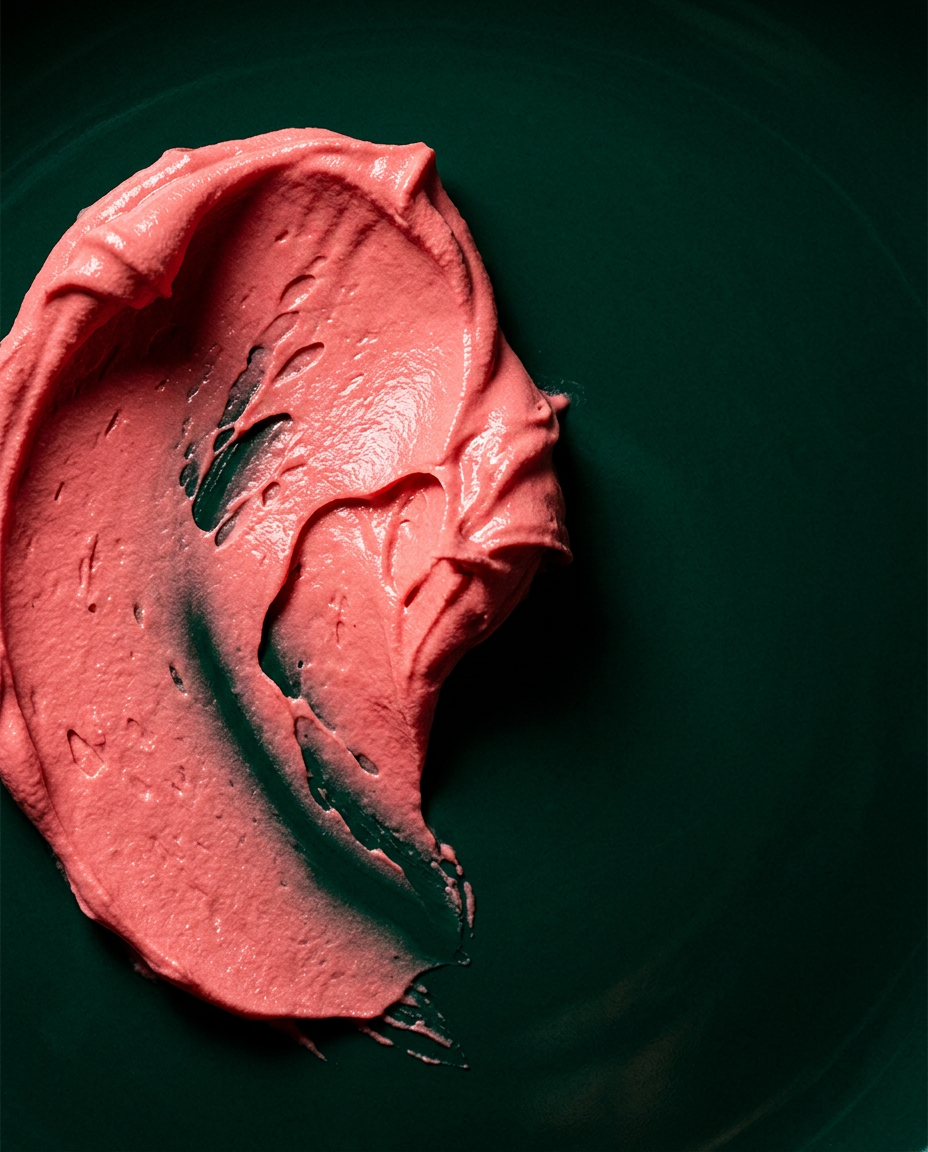
Erick Guzman: Fred, when Mary and I brought you the initial "Watermelon Whip" concept, how did you approach building the clinical ingredient story? Why did you select specific actives like Beraclay Red and Tripeptide-10 Citrulline instead of standard, off-the-shelf clay mask materials?
Fred Khoury: "When ideating new innovations, going completely outside the box is critical. It lets us weave in a fun, artistic twist where we can play on our 'active balance' modality by locating novel natural compounds that complement performance compounds. It is the intersection between art and science merging together to deliver a unique experience. The Brazilian red clay natural mineral pigments play into the color, while the oligoelements hit the performance markers needed on the skin. The unique peptide, Tripeptide-10 Citrulline, ties directly into L-Citrulline, the amino acid complex predominantly found in watermelon. Our peptide is designed to simulate the action of decorin, a natural core protein in the skin that controls collagen fiber assembly. Instead of just stimulating the skin to make more collagen, it helps regulate collagen fibril formation so fibers grow in a uniform diameter and arrange themselves in an orderly way. Ultimately, it improves skin elasticity, firmness, hydration, and smoothness while reducing the appearance of fine lines and wrinkles."
Erick Guzman: Innovation and Marketing always want impossible textures, and the lab must actually build them. How do you balance the creative demand for a "weightless, edible whip" with the hard chemical realities of creating a stable formula alongside Irving?
Fred Khoury: "Anything is possible when you have the correct starting materials and the knowledge of how to play inside and outside the box. Creative formulation and product design can take place in any industry and category."
Erick Guzman: You talk a lot about "lazy chemistry" in this industry. What makes the chassis of this mask fundamentally different from the generic clay masks on the market right now?
Fred Khoury: "The chassis is not very complex based on its composition; in fact, it is quite simplistic chemically. The novelty lies in the polymer we used that mimics an icy texture. It is about choosing the right materials for the application versus just using whatever is stocked in the facility. A skilled and artistic formulator can correctly dial in any formula from all sides, including cost feasibility, performance, scalability, and commercial viability. You cannot just dump materials into a beaker and hope it works. Sometimes it does, and when those stars align, it is magical. When they do not align, it is a nightmare for both the brand and the lab."
Erick Guzman: Winning an innovation award for a bench sample is great, but we run a massive manufacturing facility. What is the hardest part about taking this specific whipped, airy texture and running it at commercial scale without it losing its structure on the factory floor?
Fred Khoury: "We designed the formula from the start to allow room for adjustments. The formula is optimized through scaling from 500g to 5000g to a 150kg pilot, with room to go to the moon for additional production batch requirements, adjusting the processing along the way from beaker to beaker, vat to vat. This is the art of scale-up process engineering, which is embedded into our DNA. The formula simply needs to be designed correctly and have the space to be modified without changing texture and performance."
Part 3: Bench Execution & Process Engineering (Irving Mont, R&D Chemist)
Erick Guzman: A brilliant brief needs a brilliant chemist. Irving, when Mary handed you the requirements for a "Dew Whip," what was your immediate chemical concern? What is the hardest part about stabilizing that specific texture?
Irving Mont: "My first priority was dialing in the right clay levels to build a stable chassis for the formula. Based on Mary’s brief, I identified three main targets: protect the skin barrier, create the perfect whipped-watermelon sensorial experience, and ensure the active ingredients could perform as intended. The biggest challenge was balancing the clay concentration. We needed enough to suspend the ingredients in the system, particularly Beraclay Red, without creating a formula that could compromise the skin barrier or over-exfoliate. It’s a delicate balancing act: too little clay, and you risk losing suspension and structure; too much, and you risk sacrificing the skin feel and overall gentleness of the product. The second challenge was capturing that whipped-watermelon experience. I wanted the texture to feel airy and weightless while still delivering a luxurious application. I kept imagining a refreshing watermelon sorbet on a hot summer day. To bring that vision to life, I paired the right processing techniques with the appropriate equipment to develop what I like to call the perfect “sorb-ase.” The watermelon effect came together through natural pigments I had been experimenting with, complemented by a delightful watermelon fragrance. Finally, we needed to make sure the hero ingredients could deliver on their intended benefits. By balancing the structure, sensory experience, and overall formulation, we created the right foundation for the performance ingredients to support hydration and skin elasticity. The goal was to create a product that could gently cleanse, help remove excess oil, exfoliate, and leave the skin feeling clean, hydrated, and visibly plump—all without compromising the experience or the skin barrier."
Erick Guzman: Walk us through the physical architecture of this formula. How do you engineer a "whip" that feels weightless but still delivers intense hydration without crashing when it hits the skin?
Irving Mont: "That whipped, weightless texture comes down to finding the right balance of clays and hydrocolloids, then controlling how they’re incorporated and processed throughout each phase. If that balance is off, you can end up with a dense, heavy paste rather than the airy, cushiony texture we were aiming for. I approach it a bit like a game of Tetris: every ingredient has a role, and each piece needs to fit into the overall structure. Once you establish the right foundation, you can build the texture, stability, and sensory experience around it without compromising the formula’s performance. The key is engineering a system that maintains its structure in the package but transforms beautifully during application, spreading easily and leaving the skin feeling refreshed rather than weighed down. At Above Rinaldi Labs, we specialize in process engineering, which gives us the ability to fine-tune not just what goes into a formula, but how it comes together. That combination of ingredient selection, formulation architecture, and processing is what allows us to create distinctive textures like Dew Whip."
Erick Guzman: You hate when brands fairy-dust an ingredient just for the marketing label. How did you ensure the active loads in this mask were actually performing, not just sitting on the sidelines?
Irving Mont: "For me, it starts with working closely with suppliers who invest significant time and resources into developing and testing their ingredients. Their technical data gives us a strong starting point for determining appropriate use levels, understanding compatibility, and establishing key parameters such as pH and processing requirements. But supplier recommendations are just that—a starting point. Our job as formulators is to translate that information into a finished product where the ingredients work within the context of the entire system. We evaluate use levels based on the product’s intended claims, the available efficacy data, compatibility with the other ingredients, and the overall formulation. From there, we can adjust performance ingredients to meet our clients’ goals while balancing stability, sensory appeal, and cost. Ultimately, it’s not about adding an ingredient just so it can appear on the label. It’s about making intentional formulation decisions that give each ingredient a meaningful role in the finished product."
Erick Guzman: This mask won an award as a lab sample. What technical adjustments did you have to keep in mind to ensure this exact same texture survives a global manufacturing run?
Irving Mont: "The biggest consideration is that scaling up isn’t simply a matter of multiplying the formula and using a bigger vessel. A texture that performs beautifully in the lab can behave very differently when you change batch size, mixing dynamics, heat transfer, and processing times. With Dew Whip, I would pay particular attention to maintaining consistent clay and hydrocolloid dispersion, controlling the order of addition, and replicating the shear and mixing conditions needed to achieve that signature whipped texture. I’d also evaluate how the system responds to temperature fluctuations, manufacturing hold times, and long-term storage. The natural pigments would be another key focus. I’d want to verify their color stability throughout processing and shelf life, then determine whether additional stabilization measures—such as an appropriate antioxidant system—were necessary. Vitamin E could be considered if the pigment or supporting ingredients have an oxidation-related stability concern, but that decision would depend on the specific materials and compatibility data. Finally, I’d validate the formula through pilot-scale batches, accelerated and real-time stability testing, and checks for viscosity, appearance, color, and performance over time. The goal is to preserve the original experience, not just reproduce the formula on paper. At Above Rinaldi Labs, process engineering is central to that challenge: translating a successful lab prototype into a robust, repeatable manufacturing process without losing what made the product special in the first place."
Above Rinaldi, Above the Trends
Winning the MakeUp in NewYork IT Award was a massive milestone for our team. It proved exactly what we set out to do. True innovation doesn't happen by accident. You can't fairy-dust a stock base, throw a trending fruit extract into the kettle, and expect to disrupt a global market.
The Watermelon Dew Whip Mask worked because we engineered the claims from the ground up. We found a glaring white space in consumer behavior. We sourced heavy-hitting actives and dosed them to perform. A proven 173 percent elasticity boost takes actual science. We forced those ingredients into a completely novel physical structure that feels incredible on the skin, proving you don't have to sacrifice clinical efficacy for a viral aesthetic.
At Above Rinaldi Labs, we refuse to compromise the chemistry for the marketing. We build the formulas that set the standard.
